Helping people plan better, eat smarter, and enjoy food without the stress.
Plateful is a smart meal-planning app designed end-to-end — from 24 user interviews and a counterintuitive research finding, through personas, ideation, and testing, to polished final screens.
The problem with meal planning is the planning itself
01 — OverviewPeople struggle to plan balanced meals that fit time, taste, and health goals. Decision fatigue and lack of culinary confidence lead to repetitive eating or excessive takeout.
Plateful is a smart meal-planning app that learns preferences, tracks groceries, and builds weekly meal plans. It simplifies healthy eating through intelligent curation and personalized recommendations.
Understanding how people plan, shop, and cook
02 — DiscoverThrough user interviews with 24 professionals aged 21–40, we uncovered a counterintuitive truth about meal planning anxiety.
Where the market leaves gaps
03 — Competitive analysisWe analyzed meal planning apps, grocery services, and nutrition trackers to identify differentiation opportunities.
| Category | Examples | Strengths | Weaknesses |
|---|---|---|---|
| Meal Planning | Mealime, Paprika, Yummly | Easy UI, dietary filters, strong recipe databases | Limited ingredient customization, not hyper-personal for lifestyle + budget |
| Grocery + Meal Kits | Instacart, HelloFresh | Convenience + grocery integration + cooking simplified | Very expensive, rigid menus, not optimized to reduce waste |
| Nutrition Focus | MyFitnessPal, Noom | Strong tracking, behavior + diet improvement | Weak structured meal planning, no end-to-end cook → shop → track funnel |
Deep Customization
Local ingredients + cultural cuisines tailored to individual preferences
Food Waste Reduction
Smart leftover mapping system → unique white space in the market
Ecosystem Integrations
Delivery + wearables + wellness platforms working together seamlessly
Community Learning
Shared learning and social features built directly into the app
Strategic positioning and market opportunities
04 — SWOT analysisStrengths
- Hyper-personalized planning focusing on cultural, local ingredients
- Reduces food waste — clear positioning differentiator
- Health + nutrition intelligence (not just recipe browsing)
- End-to-end flow: Plan → Buy → Cook → Optimize
Weaknesses
- Needs strong data inputs (recipes, nutrition DB, behavioral insights)
- Requires partnerships for delivery integration
- Emerging brand → low initial trust + adoption barrier
Opportunities
- Rising demand for affordable healthy eating among students / young professionals
- Potential partnerships with grocery delivery + fitness apps
- Content creator / chef collabs → scalable community + education
- Subscription upsell (smart pantry, AI coach, micro habit building)
Threats
- Big players (HelloFresh / Instacart / Yummly) can fast-follow some features
- Consumer churn in nutrition apps is high
- Economic downturn may reduce spending on food products
Plateful's unique positioning around food waste reduction and cultural customization provides a defensible market position, while ecosystem integrations create network effects that help combat threats from larger competitors.
Who we're designing for
05 — Define
Jamie Lee, 24
Graduate Student"I want to eat healthy on a student budget, but I don't have time for complicated recipes."
- Affordable, easy-to-make recipes that fit health and budget
- Nutrition tracking integrated with meal planning
- Options to meal-prep in bulk to save time during busy weeks
- Balancing healthy eating with a tight budget and limited time
- Limited kitchen experience makes complex recipes challenging
- Wants nutritional guidance to support fitness goals

Ritish Nimma, 32
Marketing Manager"I want to eat healthy but lack time to research recipes that fit my needs."
- Streamlined meal planning that aligns with a busy schedule
- Easy-to-follow recipes tailored to dietary preferences
- Organized grocery list that prevents overbuying and reduces waste
- Finds meal planning time-consuming; struggles to avoid food waste
- Buys excess groceries that go unused due to last-minute changes
- Wants to engage with sustainability-focused, eco-friendly products
The user journey — from discovery to getting better every week:
Opens app · Views meal suggestions
"I need something quick but healthy"😐Selects meals · Checks nutritional info
"This fits my diet goals"😊Views grocery list · Syncs with store
"Everything is organized"😊Follows recipe · Adjusts portions
"This is easier than I thought"😄Reviews waste · Gets next plan
"I'm actually getting better at this"😄Repetitive suggestions
Users felt stuck in meal loops — the same recipes kept surfacing.
Grocery tracking confusion
Hard to sync grocery lists with what was already at home.
Overwhelming choices
Too many options caused decision paralysis — the opposite of the goal.
From 50 ideas to the right ones
06 — IdeateA design studio session with stakeholders and users generated over 50 concepts. Crazy 8s exercises rapidly explored solutions ranging from AI-powered meal matching to social cooking challenges.
Smart recipe filtering
Filter meals by time available, skill level, and dietary constraints simultaneously — not sequentially.
Fitness integration
Sync with smartwatch and health apps to generate meal suggestions based on calories burned that day.
Collaborative meal sharing
Share plans with family and friends — coordinate grocery runs and cooking duties in shared households.
From paper sketches to polished screens
07 — DesignStarted with paper prototypes to test core flows, moved to interactive prototypes. Each iteration brought us closer to a solution that felt intuitive and delightful.
Validating decisions with real users
08 — Test10 users tested the prototype across key tasks: onboarding, meal selection, and grocery list management.
The polished experience
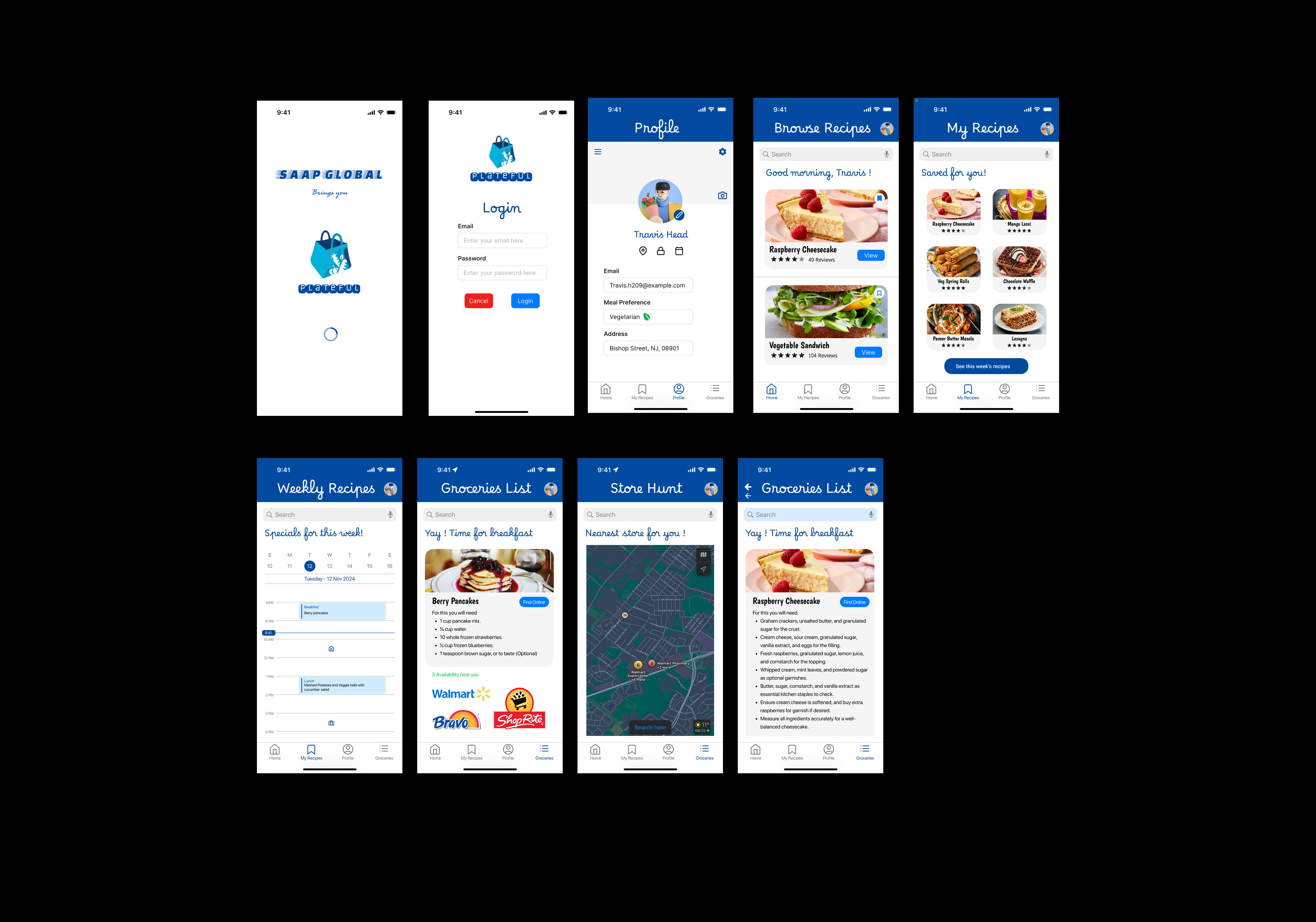
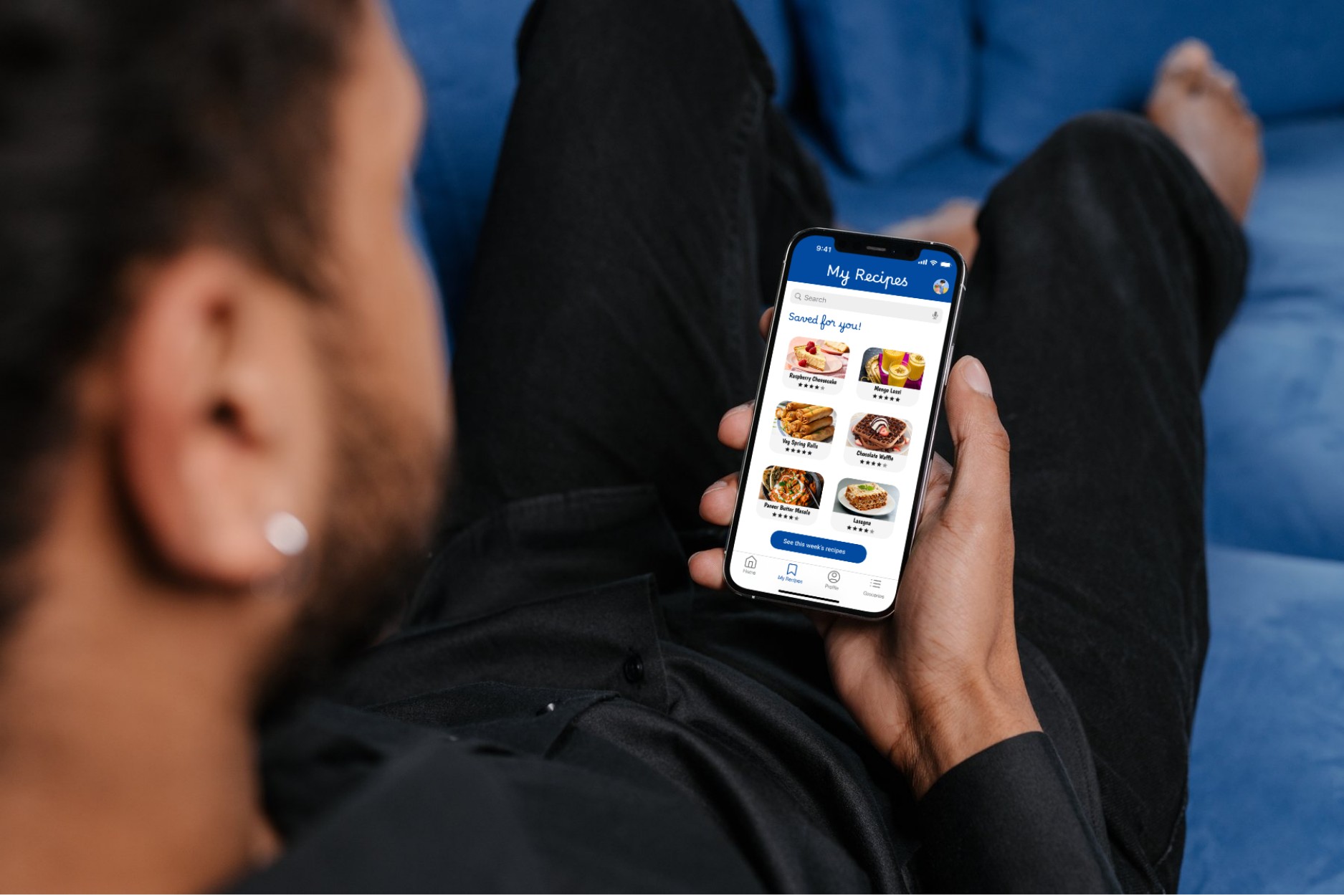
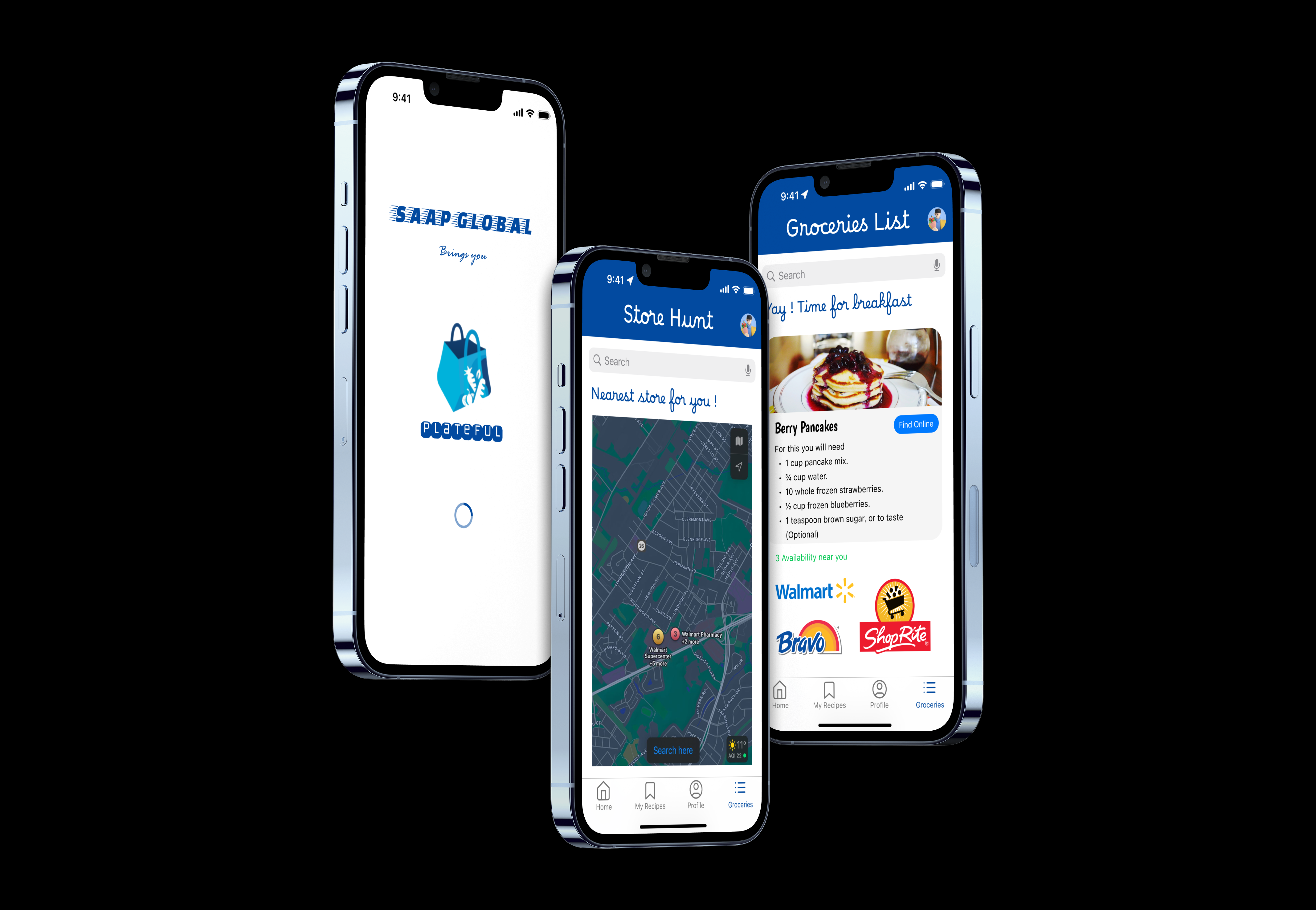
09 — Final designAfter rounds of iteration and testing, we delivered a seamless meal-planning experience that balances intelligence with simplicity.

Looking back and forward
10 — ReflectionWhat worked
- Research-driven decisions built genuine user trust
- Usability-first flow reduced friction at every step
- Smart defaults minimized setup time significantly
Challenges
- Balancing variety and simplicity in recommendations
- Ensuring AI felt helpful, not intrusive or "creepy"
- Managing the complexity of diverse dietary needs
Add smartwatch sync & real-time fitness tracking integration
Integrate calories burned data to generate smart meal recommendations based on personal health goals
Test social features for family & roommate coordination and shared meal planning
Expand educational content (cooking skills, nutrition insights) to support long-term healthy habits
Financial planning for launch
11 — Cost modelEstimated costs for developing and launching Plateful, including ongoing maintenance and operational expenses.
| Category | Low estimate | High estimate |
|---|---|---|
| App Development (iOS/Android, backend, API integration) | $50,000 | $100,000 |
| UI/UX Design (Wireframing, prototyping, user testing) | $10,000 | $25,000 |
| AI/ML Integration (Machine learning, data analytics) | $50,000 | $150,000 |
| Marketing (Digital campaigns, social media) | $10,000 | $30,000 |
| Server & Hosting (AWS/Google Cloud — annual) | $5,000/yr | $15,000/yr |
| Grocery Store Integration (API integration, revenue-sharing) | $5,000 | $15,000 |
| Legal & Compliance (Data privacy, app store regulations) | $5,000 | $10,000 |
| Grand total estimate | $150,000 | $390,000 |
Estimates based on industry standards. May vary depending on team size, location, and project scope. Annual costs reflect ongoing operational expenses after initial launch.